
A gear motor completing a stated number of cycles demonstrates endurance under the conditions actually tested. It does not automatically establish the same service life in another machine, nor does one surviving sample describe the reliability of an entire population. A useful report connects the cycle definition, samples, loads and failure criteria to the intended application.
A large cycle total is difficult to evaluate when the test procedure is missing from a quotation. Request the motion sequence and the recorded observations before using that number in a supplier comparison. The purchasing decision needs the exposure behind the number, not merely its magnitude.
What Is Included in One Cycle?
Define the complete motion sequence: travel, speed, acceleration, direction, load and dwell. A cycle might be one output revolution, one extension, or a forward-and-return operation. Those definitions cannot be compared by count alone.
Include the parts of the sequence that create stress. Starting, reversing, stopping and holding can matter differently from steady rotation. A test that omits the application’s repeated starts may accumulate revolutions without representing the same duty.
For a micro planetary gear motor, document the motor and gearbox as the tested assembly. Identify the ratio, gear arrangement, lubrication specification and relevant revisions. A result from another ratio or construction should not be transferred without an engineering explanation.
As a simple illustration, a forward-and-return cycle contains two travel legs if that is the agreed definition. Counting each leg as a cycle doubles the reported count without changing the hardware’s experience. The report should make that ambiguity impossible.
Which Application Conditions Must the Test Represent?
Begin with the actual load profile rather than only the maximum torque. Duration, direction, speed and the frequency of peaks can influence the duty. Include external radial or axial loads where they are carried by the purchased assembly.
Record mounting and heat transfer conditions. A motor running on an open metal fixture may experience a different temperature from one inside a compact enclosure. The comparison needs enough detail to judge whether the test represents the intended installation.
A brushless DC motor removes brush wear from its own construction, but that does not eliminate every possible life-limiting mechanism in a geared assembly. Bearings, gears, lubrication, electronics and interfaces still need consideration according to the design.
Use Gian’s guide to designing a DC gear motor to organize the application requirements. For endurance work, convert those requirements into a repeatable test schedule with recorded operating conditions.
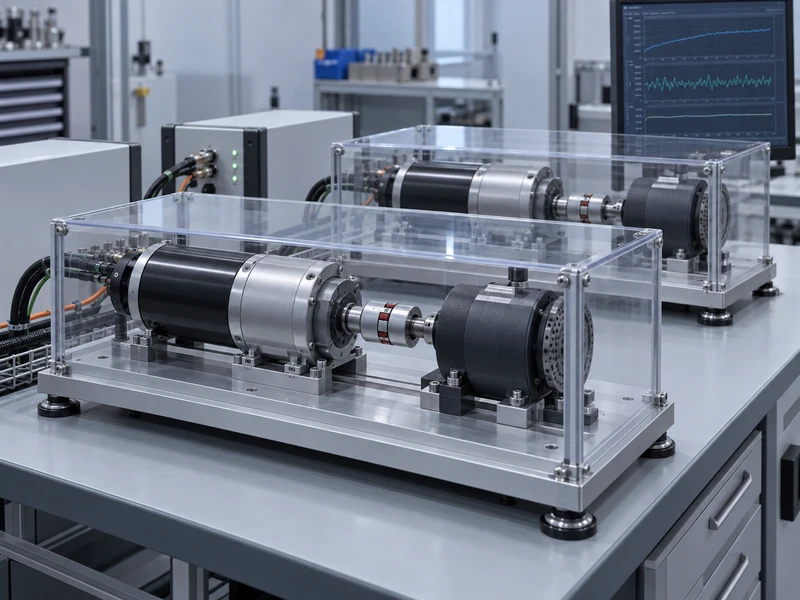
How Should Failure Be Defined Before Testing?
A motor does not need to stop completely to fail an application’s requirement. Excessive backlash, reduced output speed, leakage, unacceptable noise or a temperature limit can be relevant failure criteria. Define measurable thresholds before the trial begins.
Specify when each quantity is checked and under what conditions. Comparing a cold initial measurement with a hot final measurement may confuse reversible operating effects with deterioration. Use a consistent assessment procedure where the purpose is to track change.
Separate a test-rig interruption from a product failure. A failed load fixture, disconnected cable or data-acquisition outage may require investigation without proving that the gear motor failed. Preserve the event and its disposition instead of silently removing it from the record.
Also define how maintenance is handled. If lubrication replacement, adjustment or component replacement is allowed during the test, the final claim should disclose it. An assembly completing the count after repair is different evidence from an untouched assembly completing it.
What Do Sample Numbers and Survivors Tell You?
Record how many units entered the test, how they were selected and which production lots they represent. A hand-selected development sample can answer a design question, but it may not represent normal manufacturing variation. State the sample’s purpose clearly.
Retain each unit’s individual history. Combining all cycles into one total can hide that one unit failed early while another ran much longer. A per-unit record allows a reliability specialist to interpret the evidence with an appropriate method.
A unit still operating when the test ends has a known exposure without a known failure time. That information is valuable, but it should not be recorded as if failure occurred at the planned stopping point. The analysis needs to distinguish failures from surviving or otherwise withdrawn samples.
Do not infer a guaranteed life from the absence of failures in a small trial. A population reliability statement requires an appropriate statistical basis and clearly stated confidence and assumptions. If that analysis has not been performed, report the observed test result directly.
When Is Accelerated Testing Credible?
An accelerated program needs an engineering basis connecting its chosen stress to the deterioration being studied. Multiplying torque or speed by two supplies no general conversion into field operating hours. Excessive test severity can instead damage the assembly through a mechanism that normal service would not produce.
NIST’s accelerated life test planning guidance emphasizes planning stress levels and avoiding conditions that create mechanisms unlike those of interest. Its acceleration-model discussion also makes the model and failure mechanism central to extrapolation.
For a gear motor program, ask the test owner to identify the mechanism being accelerated and the evidence supporting the model. Different mechanisms may respond differently to temperature, load or speed. A single acceleration factor should not be assumed to describe the entire assembly without justification.
Reducing idle time is another potential change to the duty. It may increase the number of movements per day while also altering thermal recovery and lubrication behavior. Document the resulting temperatures and explain why the compressed schedule remains relevant.
What Should the Endurance Report Contain?
A concise summary is useful, but it should point to the underlying records. The reader needs enough information to reconstruct the tested conditions and understand any interruptions. A graph ending at a large number is not sufficient by itself.
| Report Element | Question It Answers |
| Sample identification | Which revisions and production units were tested? |
| Cycle and load definition | What mechanical and electrical duty was applied? |
| Failure criteria | What change would have ended a passing result? |
| Individual exposure records | When did each unit fail, stop or complete the trial? |
| Extrapolation method | How, if at all, is the result related to service life? |
Include baseline and interval measurements relevant to the acceptance criteria. A progressive increase in backlash or current may be informative even before the limit is reached. Preserve the measurement method so the trend can be distinguished from changes in the test setup.
Photographs and teardown observations can support the record where appropriate. They should be tied to identified samples and dates. Do not substitute a generic gear photograph for evidence from the tested assembly.
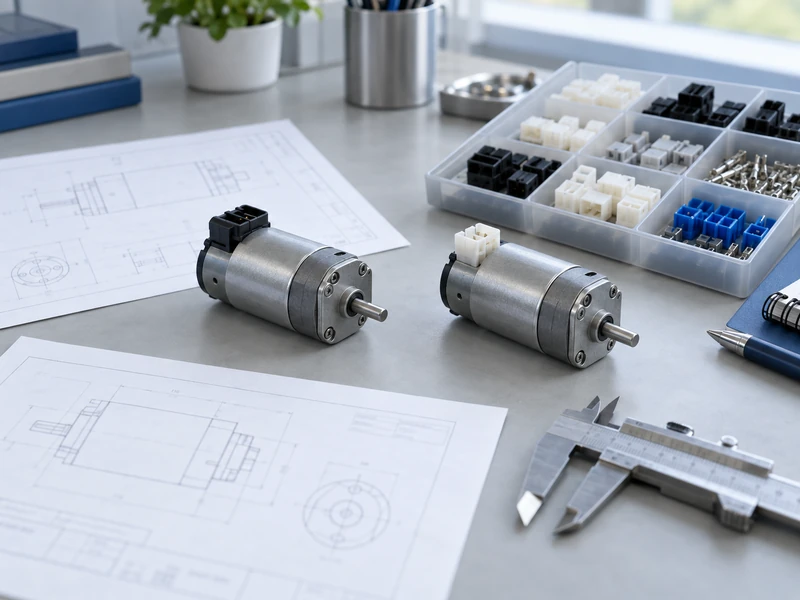
Why Does a Receipt Check Leave Lifetime Questions Unanswered?
A receipt check establishes the condition of a delivered unit at that stage of production. An endurance program follows its behavior through a specified operating exposure. Evidence from the first activity cannot substitute for the exposure record produced by the second.
Gian’s pre-installation test guide describes useful functional checks for that earlier stage. Those checks can establish a baseline for endurance samples, but they do not replace a documented life-test plan.
Likewise, knowledge of common planetary gear motor problems can help identify relevant observations. The endurance report should still distinguish an observed failure mechanism from a suspected explanation awaiting inspection.
What Can a Buyer Reasonably Conclude?
A well-documented trial can demonstrate that identified assemblies completed a defined exposure while meeting stated criteria. With suitable sampling and analysis, it may support a broader reliability claim. The wording should match the strength and scope of the evidence.
When asking Gian for endurance information, provide the intended duty, environment, expected service exposure and measurable failure limits. Ask whether available test evidence represents those conditions directly or requires a justified comparison. That conversation is more useful than requesting the largest possible cycle count.
Keep the conclusion attached to the approved configuration and review it after material design changes. A cycle count becomes procurement evidence when the reader can see what was tested, what was measured and which assumptions connect the result to the application.