
Unused gear motors need a storage and release process because an unopened package does not prove that the assembly remains ready for installation. Moisture, contamination, handling and an unknown storage history can affect the condition of a unit before it ever runs. Follow the supplier’s instructions for the particular assembly, then verify the relevant condition before release.
The objective is to preserve the approved product and its traceability. A useful warehouse procedure records what was received, how it was protected and what checks are required when it returns to the production flow.
What Storage Instructions Apply to the Actual Assembly?
Begin with the supplier’s requirements for temperature, humidity, packaging, orientation and permitted storage duration. Check whether the instructions cover the complete geared assembly or only the motor. Electronics, seals, lubricants and connectors may introduce additional considerations.
For a micro planetary gear motor, record the exact part and revision. Do not assume that instructions for a large industrial motor apply unchanged to a compact sealed gearbox. The construction and intended maintenance practices can differ substantially.
A stored brushless DC motor may also have attached feedback devices or electronics that need appropriate handling. Identify those features in the warehouse record. The absence of brushes does not remove the need to protect bearings, surfaces and electrical interfaces.
The U.S. Department of Energy motor systems handbook discusses storage and transport risks such as moisture and vibration. Its industrial-motor guidance provides context, but product-specific instructions should determine actions such as shaft movement, preservation or electrical testing on a small gear motor.
How Should Incoming Packaging Be Evaluated?
Inspect the outer package for damage, water exposure and signs that its protection has been compromised. Record exceptions before discarding the shipping materials. Photographs tied to the shipment and affected unit can help the supplier assess what happened.
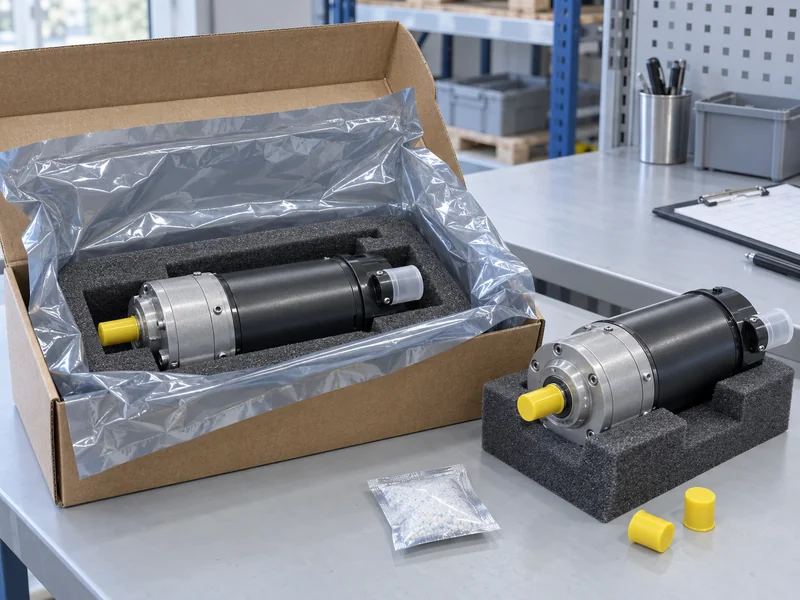
Check that the packaging supports the assembly without loading the output shaft or fragile connectors in an unintended way. Protective caps should remain in place where specified. Loose parts should not be able to strike the motor during normal handling.
Distinguish a protective plastic bag from a qualified moisture-barrier package. The appearance of a bag alone does not establish its performance or the condition of any desiccant inside. Follow the packaging specification rather than improvising a storage claim from visual inspection.
If a package must be opened for inspection, define how it will be resealed or repacked. An inspection process that removes protection and leaves the assembly exposed can create a new problem after an otherwise satisfactory receipt check. Keep the replacement materials consistent with the approved method.
Which Warehouse Conditions Need Control?
Store units in the designated area and keep them away from foreseeable moisture, dust and chemical contamination. Avoid locations where water can accumulate or where handling equipment repeatedly strikes the packages. The specific environmental limits should come from the product and packaging requirements.
Consider vibration transmitted through shelving or nearby machinery. A stationary bearing can experience conditions different from those during operation. If the storage location is exposed to significant vibration, ask the supplier whether additional protection or a different location is appropriate.
Temperature transitions can also matter. Moving a cold package into a warm, humid area may create condensation under some conditions. Follow a defined acclimatization procedure where the supplier or the storage environment requires one, rather than opening every package immediately on arrival.
Do not add heaters, preservatives or lubricants without an approved method. A treatment suitable for one motor construction may be incompatible with another assembly’s seals, plastics, electronics or lubricant. Preservation should maintain the approved condition rather than introduce an undocumented modification.
What Information Should Stay With Each Lot?
Maintain the part number, revision, supplier lot or serial identification, receipt date and storage location. Record any packaging damage, repacking or unusual environmental exposure. These details make it possible to decide whether a unit needs additional review before assembly.
Use a stock-rotation method consistent with the supplier’s storage limits and the organization’s inventory rules. A date-based system is useful only if the date has a clear meaning. Manufacturing date, shipment date and warehouse receipt date should not be treated as interchangeable without a defined rule.
Gian’s gear motor dimensions and specifications guide helps identify the technical information associated with the purchased unit. Keep that specification and any storage instructions accessible from the lot record.
If traceability is lost, do not invent a date from the appearance of the carton. Segregate the affected stock for an appropriate review and recover the identification from reliable records where possible. A visibly clean unit can still have an unknown history.
Should Stored Shafts Be Turned Periodically?
Only use a shaft-movement routine when it is appropriate for the specific assembly and supported by the supplier’s instructions. Some industrial motor procedures include periodic rotation, but that does not establish a universal requirement for every small gear motor. The transmission may change what can be moved and how.
Do not force a gearbox to backdrive because the output shaft resists hand rotation. Resistance can result from the ratio or mechanism rather than storage damage. Applying excessive torque can create damage that was not present before the check.
Similarly, do not energize an unidentified assembly with a convenient power supply as a storage exercise. Confirm the motor type, wiring and permitted test conditions first. A brushless motor requires appropriate commutation, and an attached driver may have its own requirements.
Questions about internal condition should be referred to the supplier with the storage history. Gian’s article on common gearbox failures provides background on possible mechanisms, but it should not be used to diagnose an unopened unit from a single external observation.
What Checks Are Appropriate Before Release?
Define release checks according to storage duration, packaging condition and exposure history. A recently received, properly stored lot may need a different review from units recovered after an unknown period in a damp area. The procedure should identify when supplier consultation is required.
| Release Check | Reason for the Check |
| Identity and revision | Confirms that the unit matches the intended assembly requirement |
| Storage history | Identifies time limits, repacking and unusual exposure |
| External condition | Finds visible corrosion, contamination or handling damage |
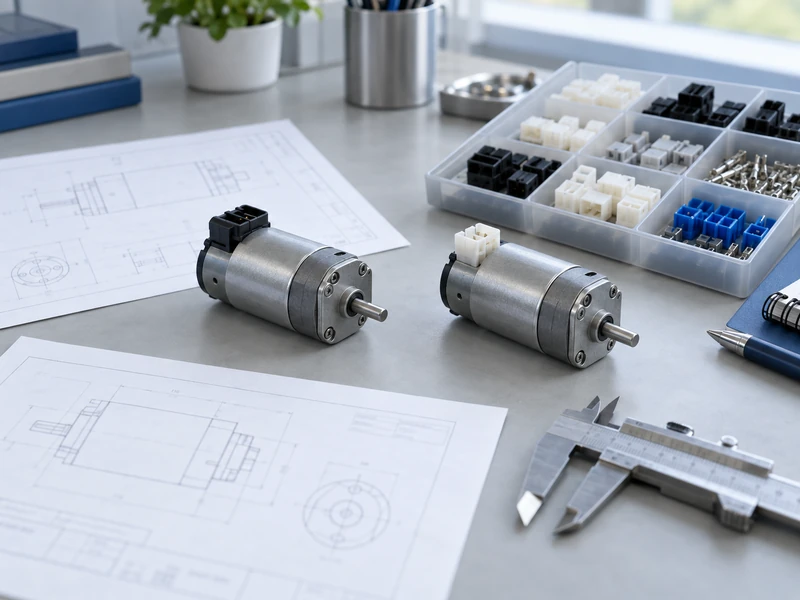
| Electrical interfaces | Checks caps, connectors and accessible cable condition |
| Approved functional test | Verifies relevant operation under a defined procedure |
Use the applicable inspection method without adding unsuitable tests. For example, an insulation test intended for a different motor class may damage connected electronics or provide an irrelevant result. The test voltage and connection arrangement must be appropriate to the actual product.
Where a functional run is required, record the supply, load and acceptance criteria. Gian’s pre-installation gear motor test guide provides broader context for these checks. Storage release should add the history review that a routine functional test alone cannot supply.
How Should Questionable Stock Be Handled?
Keep questionable units identifiable and separate from released stock while the review is open. Document the observed condition and the reason for the hold. This prevents an unresolved unit from returning to production simply because its outer package was replaced.
Send the supplier the part identification, storage interval, packaging condition and evidence of the exposure. Ask for a disposition specific to those facts. Possible next steps may include inspection, an approved test, controlled rework or another agreed action.
Do not treat a successful brief run as proof that every storage-related concern has disappeared. It can demonstrate the functions actually tested, while leaving questions about corrosion, lubrication or long-term performance unresolved. State the limits of the evidence when deciding on release.
What Should a Practical Storage Plan Deliver?
A practical plan gives warehouse and assembly personnel clear instructions they can follow consistently. It identifies the approved packaging, storage conditions, record requirements and release path. It also states which exceptions need engineering or supplier review.
When purchasing from Gian, request storage and handling requirements alongside the motor specification. Share any expected long inventory period or unusual warehouse environment early. That allows the preservation method to be considered before the shipment arrives.
The final release record should connect the physical unit to its identity, storage history and completed checks. This makes readiness for assembly a documented decision, rather than an assumption based on an unused appearance.