
Gearboxes are critical components in numerous industrial systems, including conveyors, mixers, wind turbines, machine tools, and heavy-duty material handling equipment. Their primary role—transmitting power while adjusting speed and torque—makes them indispensable. However, because gearboxes operate under continuous mechanical stress, harsh environments, and varying loads, failures are not uncommon.
Gearbox failures cause downtime, safety hazards, and costly repairs or replacements. Understanding the most common failure modes and how to prevent them is crucial for engineers, maintenance teams, and plant managers seeking reliable and long-term operational performance.
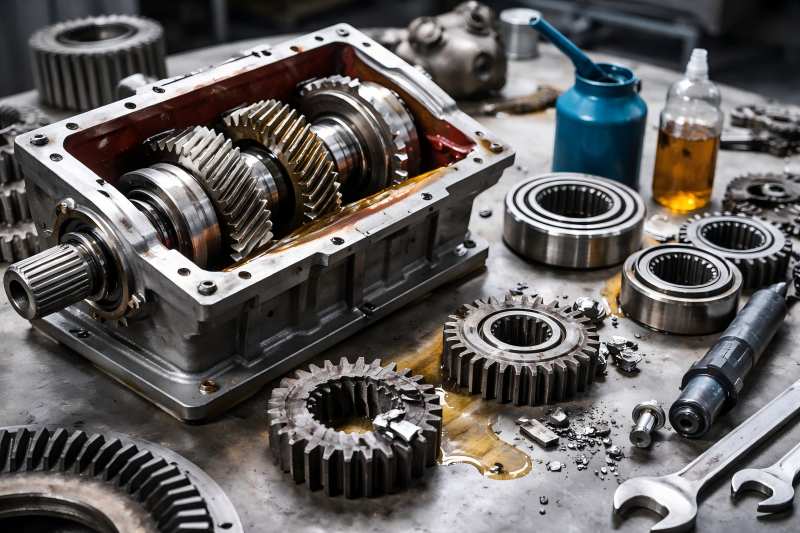
Why Gearbox Failures Occur
Before examining failures, it’s essential to understand why gearboxes fail. Most failures are not sudden or random—they develop gradually due to underlying issues such as:
- Improper lubrication
- Overloading or shock loads
- Misalignment during installation
- Poor maintenance practices
- Contamination (dust, water, chemicals)
- Design or material mismatches
In many cases, a gearbox fails not because of a single problem, but due to multiple small issues accumulating over time.
Gear Tooth Wear and Pitting
What It Is
Gear tooth wear is among the most common gearbox failure issues. It occurs when gear surfaces gradually degrade due to repeated contact under load. Pitting is a specific form of surface fatigue where small pits form on the gear teeth.
Causes
- Inadequate or incorrect lubrication
- Excessive load beyond design limits
- Poor gear material quality or heat treatment
- Contaminated lubricant containing abrasive particles
Warning Signs
- Increased noise or whining sounds
- Vibration spikes at gear mesh frequencies
- Metallic particles found in oil analysis
- Reduced transmission efficiency
Prevention
- Use the correct lubricant viscosity and type
- Maintain proper oil cleanliness
- Avoid overload conditions
- Schedule regular oil analysis and inspections
Gear Tooth Breakage
What It Is
Gear tooth breakage is a severe failure where one or more teeth crack or fracture completely. This often results in immediate gearbox failure.
Causes
- Sudden shock loads or torque spikes
- Fatigue due to long-term overloading
- Manufacturing defects
- Improper heat treatment
Warning Signs
- Sudden loud knocking or clunking noises
- Sharp vibration changes
- Loss of torque transmission
Prevention
- Design gearboxes with sufficient service factors
- Avoid frequent starts, stops, or shock loading
- Ensure correct gear material and hardness
- Use torque limiters or soft starters
Bearing Failures
What It Is
Bearings support shafts and ensure smooth rotation. Bearing failure often causes gearbox breakdowns before gear damage occurs.
Causes
- Lubrication starvation or contamination
- Shaft misalignment
- Excessive radial or axial loads
- Improper bearing installation
Warning Signs
- High-frequency vibration
- Increased operating temperature
- Rumbling or grinding noises
- Metal debris in lubricant
Prevention
- Ensure correct bearing selection
- Maintain precise shaft alignment
- Use clean, properly filtered lubricants
- Follow correct installation procedures
Lubrication Failure
What It Is
Lubrication failure occurs when oil or grease cannot adequately separate moving surfaces, leading to metal-to-metal contact.
Causes
- Incorrect lubricant type or viscosity
- Insufficient oil level
- Oil degradation due to heat or oxidation
- Water or chemical contamination
Warning Signs
- Rising gearbox temperature
- Burnt oil smell
- Discolored or foamy oil
- Rapid wear of gears and bearings
Prevention
- Follow manufacturer lubrication recommendations
- Monitor oil condition and change intervals
- Use breathers and seals to prevent contamination
- Implement oil condition monitoring
Shaft Misalignment
What It Is
Misalignment occurs when connected shafts are not properly aligned, causing uneven load distribution inside the gearbox.
Causes
- Poor installation practices
- Foundation settling or deformation
- Thermal expansion differences
- Coupling wear
Warning Signs
- Excessive vibration
- Premature bearing wear
- Uneven gear tooth wear
- Seal leakage
Prevention
- Perform laser alignment during installation
- Recheck alignment after commissioning
- Use flexible couplings where appropriate
- Inspect foundations and mounting surfaces
Seal Failures and Oil Leakage
What It Is
Seals prevent lubricant leakage and block contaminants. Seal failure often leads to secondary failures if not addressed.
Causes
- Worn or damaged seals
- Shaft surface imperfections
- Excessive internal pressure
- Chemical attack on seal materials
Warning Signs
- Visible oil leaks
- Low oil levels
- Dirt accumulation around seals
Prevention
- Use seals compatible with operating conditions
- Maintain proper shaft surface finish
- Control internal pressure with breathers
- Replace seals during scheduled maintenance
Overheating
What It Is
Overheating accelerates lubricant breakdown and material fatigue, significantly reducing gearbox lifespan.
Causes
- Excessive load or speed
- Insufficient lubrication
- Poor heat dissipation
- Blocked cooling paths
Warning Signs
- Elevated oil temperature
- Darkened or oxidized lubricant
- Reduced gearbox efficiency
Prevention
- Monitor operating temperatures
- Ensure adequate lubrication flow
- Improve ventilation or cooling systems
- Avoid continuous overload conditions
Common Gearbox Failures Overview
| Failure Type | Primary Cause | Typical Symptoms | Potential Consequences |
| Gear wear & pitting | Poor lubrication, overload | Noise, vibration | Efficiency loss |
| Gear tooth breakage | Shock loads, fatigue | Loud knocking | Sudden failure |
| Bearing failure | Misalignment, contamination | Heat, vibration | Shaft damage |
| Lubrication failure | Wrong oil, contamination | Overheating | Rapid wear |
| Misalignment | Installation errors | Seal leaks | Component fatigue |
| Seal failure | Wear, pressure | Oil leakage | Secondary failures |
Preventive Maintenance Strategies
Preventive maintenance is the most effective way to minimize gearbox failures. A proactive approach focuses on early detection, condition monitoring, and planned interventions.
Key Preventive Practices
- Regular oil analysis
- Vibration monitoring
- Thermal inspections
- Scheduled visual inspections
- Load and operating condition tracking
Condition Monitoring Techniques
Modern condition monitoring tools allow failures to be detected long before catastrophic damage occurs.
| Monitoring Method | What It Detects | Benefit |
| Oil analysis | Wear particles, contamination | Early fault detection |
| Vibration analysis | Gear and bearing defects | Predictive maintenance |
| Thermography | Overheating | Non-contact inspection |
| Acoustic monitoring | Gear mesh issues | Early noise detection |
Installation and Design Considerations
Many gearbox problems originate during installation or selection. Preventing failures begins long before operation.
Best Practices
- Select gearboxes with proper service factors
- Match gearbox type to application load characteristics
- Ensure rigid, flat mounting surfaces
- Follow torque and alignment specifications
Training and Human Factors
Regardless of design quality, improper handling or poor maintenance can still lead to gearbox failure.
Key Actions
- Train maintenance personnel on lubrication and alignment
- Establish standardized inspection checklists
- Document operating limits and maintenance history
Conclusion
Gearbox failures are rarely unavoidable. In most cases, they result from predictable, preventable conditions such as poor lubrication, misalignment, overload, or lack of monitoring. By understanding common gearbox failure modes and implementing effective preventive strategies, industries can dramatically reduce downtime, maintenance costs, and safety risks.
A combination of proper design selection, correct installation, routine condition monitoring, and disciplined maintenance practices is the key to long-lasting, reliable gearbox performance. Preventive measures consistently deliver lower long-term costs than corrective repairs after failure.